On this page
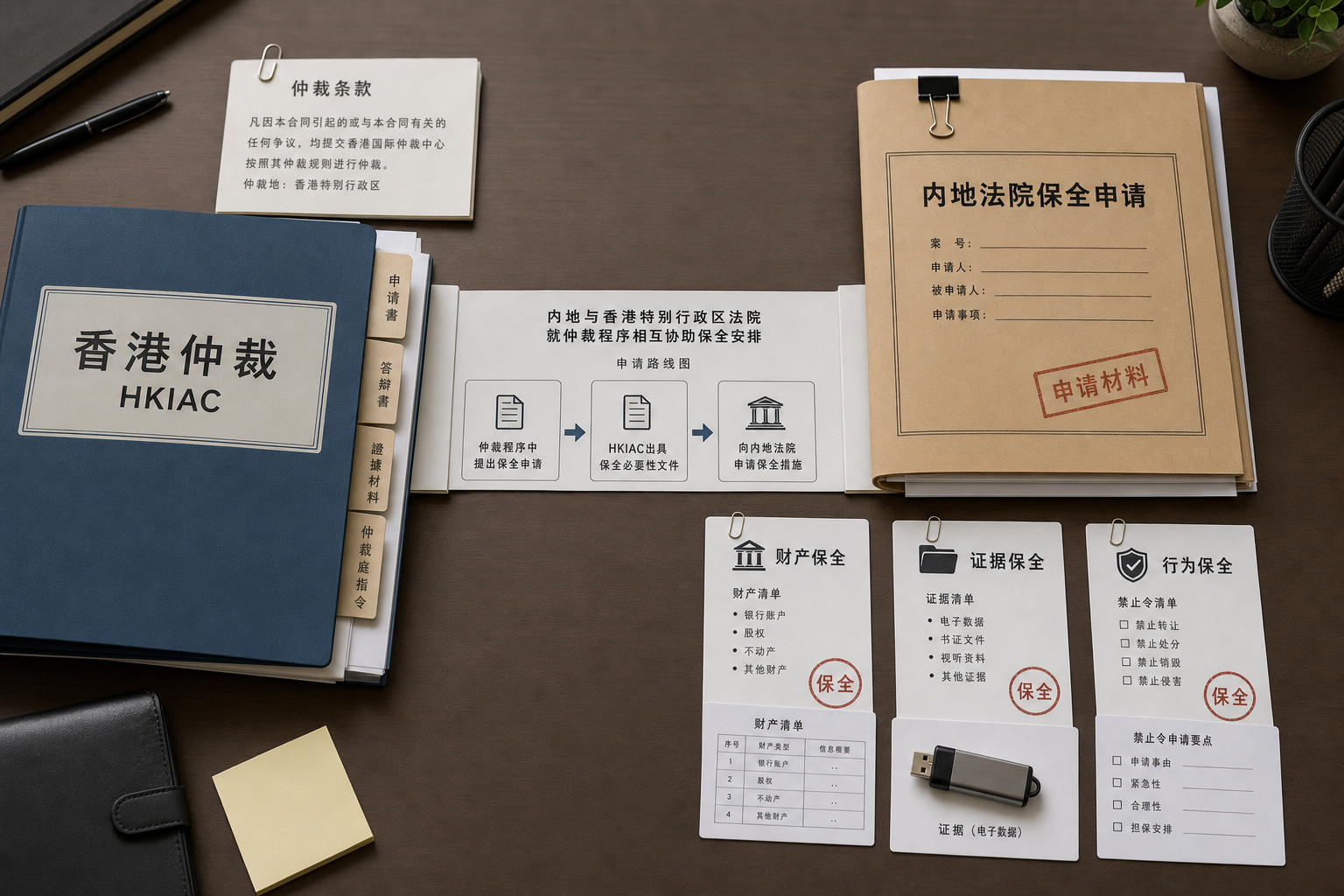
The HK-Mainland Interim Measures Arrangement is one of the most important reasons China-related contracts sometimes choose Hong Kong arbitration instead of a purely offshore forum.
In plain English: if a dispute is in an eligible Hong Kong-seated institutional arbitration, a party may ask a Mainland Chinese court for interim measures. Those measures can include property preservation, evidence preservation, and conduct preservation . For a foreign buyer dealing with a Mainland supplier, that can mean the difference between a paper claim and real pressure on assets in China.
The official English text of the arrangement is published by the Hong Kong Department of Justicewww.doj.gov.hkwww.doj.gov.hk. HKIAC also maintains a practical FAQ on the Interim Measures ArrangementHKIAC | Hong Kong International Arbitration CentreInterim Measures Arrangement - FAQs - HKIAC | Hong Kong International Arbitration CentrePRC-HK INTERIM MEASURES ARRANGEMENT:FREQUENTLY ASKED QUESTIONSVIEW IN PDF FORMAT: English 简体中文 русский Spanish 한국어 *Please note that the translations provided …hkiac.org explaining how applications work in HKIAC-administered cases.

If cost is part of the forum choice, run the likely claim amount through the HKIAC fee calculator and compare it with CIETAC, SIAC and ICC using the arbitration cost comparator.
The short definition
The arrangement is a mutual assistance mechanism between Mainland China and Hong Kong for court-ordered interim measures in support of arbitral proceedings. It took effect in 2019 and is often discussed in the same breath as HKIAC, because HKIAC is one of the main qualified institutions used in China-related disputes.
The key idea is not complicated. Hong Kong remains the seat of arbitration. The arbitral tribunal decides the merits. But when assets, evidence, or conduct in Mainland China need urgent protection, the Mainland court may be asked to act.
That is the strategic value.
What kinds of measures are covered?
Mainland interim measures under the arrangement include:
- Property preservation, such as freezing a bank account, receivable, equity interest, or other property.
- Evidence preservation, where evidence may be lost or later become difficult to obtain.
- Conduct preservation, where a party asks the court to require or restrain certain conduct.
For supplier disputes, property preservation is usually the headline. But evidence preservation can matter too. If the dispute concerns defective goods, molds, factory records, product samples, or shipping documents, preserving evidence may be just as important as preserving money.
The conditions are not automatic
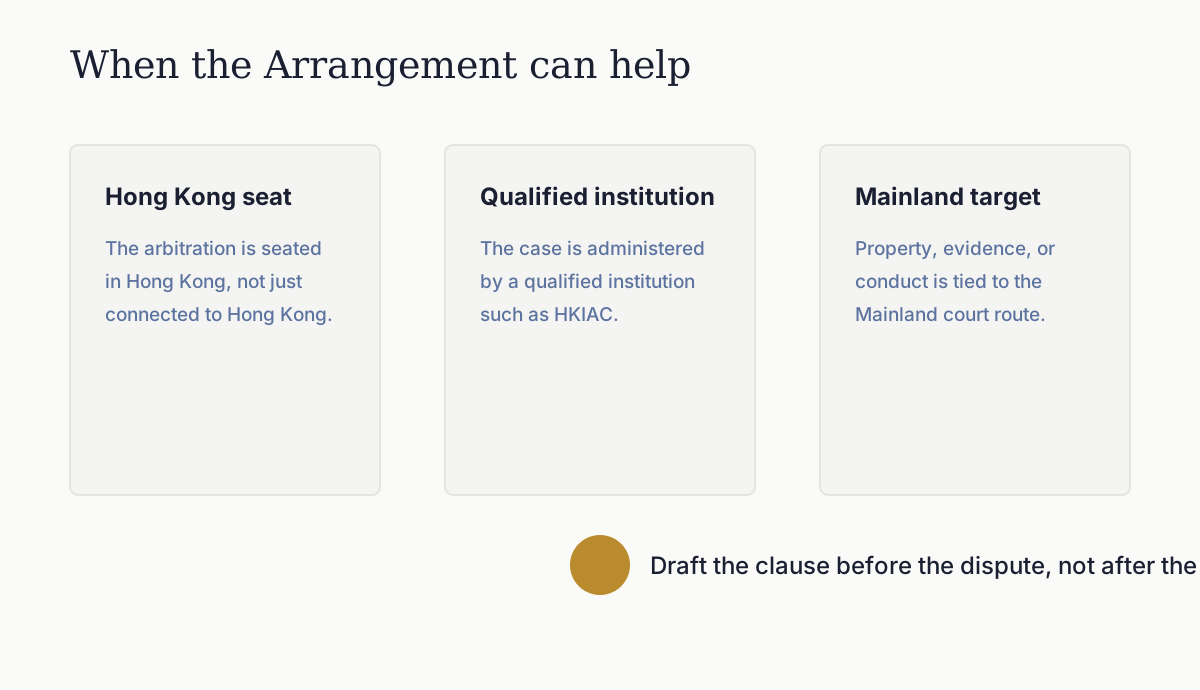
Not every Hong Kong arbitration qualifies.
The arbitration must be seated in Hong Kong. It must also be administered by a qualified arbitral institution or permanent office . HKIAC is commonly used, but the point is broader: the clause must be drafted with the arrangement in mind.
That is why wording matters. “Arbitration in Hong Kong” may not be as strong as a clause that clearly provides for arbitration administered by HKIAC, seated in Hong Kong, under the relevant rules. If the goal is Mainland interim measures, the drafting should not be casual.
The Mainland court route also has to fit the target. The court is usually selected based on where the respondent resides or where the property, evidence, or conduct is located . A buyer cannot simply choose a convenient court because it sounds better.
How the route usually works
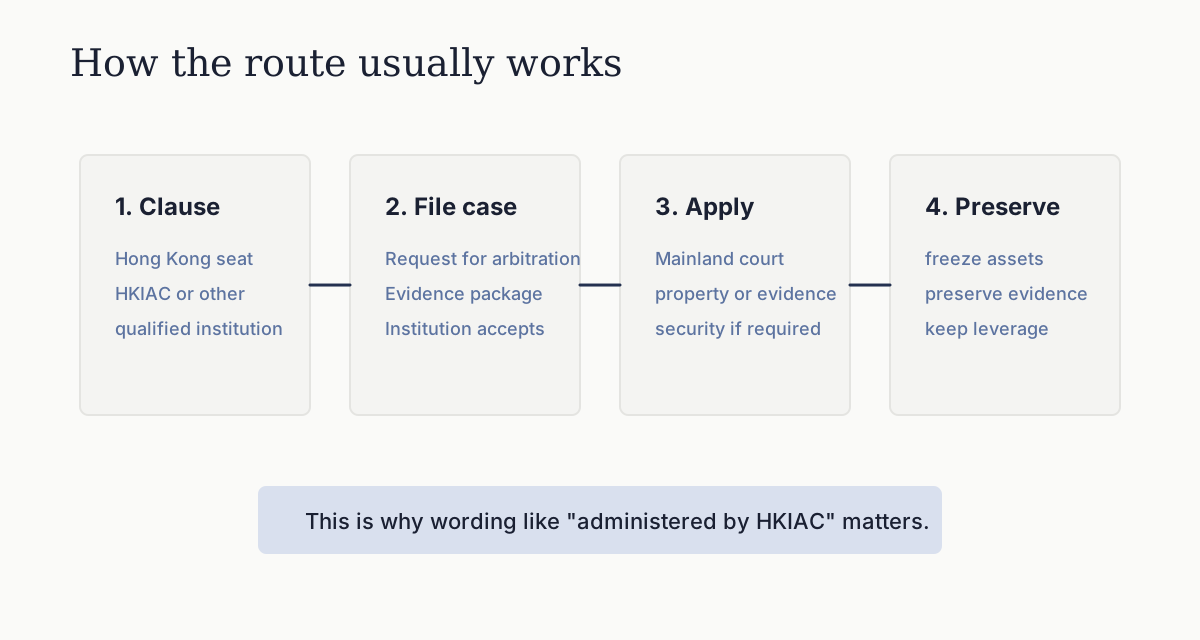
In a typical HKIAC case, the party files the arbitration and prepares an interim-measures application. If the case has already been accepted, the institution can forward the application materials to the relevant Mainland court. The application will need supporting documents, Chinese translations where required, evidence of the arbitration agreement, party identity documents, and a clear statement of the requested measure.
Where the application is made before the arbitration has been accepted, timing becomes more delicate. The applicant needs to make sure the arbitration is commenced and accepted within the required timeframe , otherwise the preservation route may fail.
Mainland courts may require security . That means the applicant should budget for a guarantee or other security arrangement before assuming that preservation can happen immediately.
Why this matters in contract drafting
Many foreign buyers choose arbitration clauses by instinct. They pick New York, London, Singapore, or their home jurisdiction because it feels safer. Sometimes that is right. But if the supplier’s meaningful assets are in Mainland China, the clause must be tested against enforcement and interim relief.
The arrangement gives Hong Kong a special position. It lets parties keep a Hong Kong seat and international arbitration environment while still seeking Mainland court assistance before the award is issued.
That does not make Hong Kong the best choice for every contract. CIETAC, SCIA, SHIAC, a Mainland court, or another forum may be more practical depending on value, counterparty, language, asset location, and cost. But the arrangement is a real advantage when Mainland asset preservation is part of the strategy.
Common mistakes
The first mistake is thinking “Hong Kong arbitration” automatically means Mainland preservation. It does not. The seat, institution, and procedure all matter.
The second mistake is using an ad hoc arbitration clause when the party wanted the arrangement’s benefits. The arrangement is built around eligible institutional arbitration, not every private arbitration label.
The third mistake is waiting until the dispute begins to discover that the clause is unclear. By then, the supplier may already be delaying, assets may be moving, and the buyer may have limited time to fix documents.
The fourth mistake is using the arrangement as a slogan. It is not enough to say “we can freeze assets in China.” A real application needs asset clues, evidence, translations, security, and fast coordination between arbitration counsel and the Mainland court route.
How this connects to demand letters
If the contract contains a strong HKIAC clause that can support Mainland interim measures, a demand letter has more weight. The supplier can see that ignoring the letter may lead to a real proceeding and a real preservation application.
But timing still matters. If the supplier is likely to move assets immediately after receiving the letter, the preservation plan should be prepared first. The demand letter should not accidentally give the supplier a head start.
The bottom line
The HK-Mainland Interim Measures Arrangement is not just a technical arbitration rule. It is a contract-drafting and dispute-strategy tool.
For a foreign buyer, the practical question is this: if the Chinese counterparty ignores you, can your arbitration clause help you reach Mainland assets before the final award? If the answer matters, the clause should be drafted around the arrangement from the start.
If you are reviewing a China-related contract or deciding whether to send a demand letter under an HKIAC clause, contact me. I can assess whether the clause, evidence, and asset-preservation route support the pressure you want to create.
References
- Supreme People’s Court, Arrangement Concerning Mutual Assistance in Court-ordered Interim Measures in Aid of Arbitral Proceedings by the Courts of the Mainland and of the HKSAR (Judicial Interpretation No. 14 of 2019), Chinese full text: http://gongbao.court.gov.cn/Details/512d83a54880609e30b96321df3899.htmlgongbao.court.gov.cn最高人民法院关于内地与香港特别行政区法院就仲裁程序相互协助保全的安排 - 中华人民共和国最高人民法院公报gongbao.court.gov.cn
- Hong Kong Department of Justice, English text of the Arrangement (courtesy translation): https://www.doj.gov.hk/en/mainland_and_macao/pdf/arbitration_interim_e.pdfwww.doj.gov.hkwww.doj.gov.hk
- Hong Kong Department of Justice, updated list of qualifying arbitral institutions and permanent offices under Article 2(1), effective April 2, 2025: https://www.doj.gov.hk/en/community_engagement/press/20250402_pr2.htmlwww.doj.gov.hkDepartment of Justice - Community Engagement - Press Releases - Institutions and permanent offices qualified for interim measure applications announcedwww.doj.gov.hk
- HKIAC, Interim Measures Arrangement FAQs, including the role of the Letter of Acceptance: https://hkiac.org/arbitration/interim-measures-arrangement/interim-measures-arrangement-faqs/HKIAC | Hong Kong International Arbitration CentreInterim Measures Arrangement - FAQs - HKIAC | Hong Kong International Arbitration CentrePRC-HK INTERIM MEASURES ARRANGEMENT:FREQUENTLY ASKED QUESTIONSVIEW IN PDF FORMAT: English 简体中文 русский Spanish 한국어 *Please note that the translations provided …hkiac.org

This article is part of the China Legal Glossary series. Related reading: What Is Asset Preservation in China?, What Is HKIAC?, and Arbitration in China Is Not as Scary as You Think.
Frequently Asked Questions
What is the HK-Mainland Interim Measures Arrangement?
It is an arrangement under which parties to eligible Hong Kong-seated institutional arbitrations may apply to Mainland Chinese courts for interim measures such as property preservation, evidence preservation, and conduct preservation.
Does every Hong Kong arbitration qualify?
No. The arbitration must meet the arrangement's conditions, including a Hong Kong seat and administration by a qualified institution or permanent office.
Why does it matter for contracts with Chinese suppliers?
It can let a party use a Hong Kong arbitration clause while still seeking Mainland court support to preserve assets or evidence in China.
Can HKIAC arbitration freeze assets in Mainland China?
A qualifying HKIAC arbitration may support a Mainland court application for property preservation, but the applicant still needs a proper clause, evidence, asset clues, translations, and security.