On this page
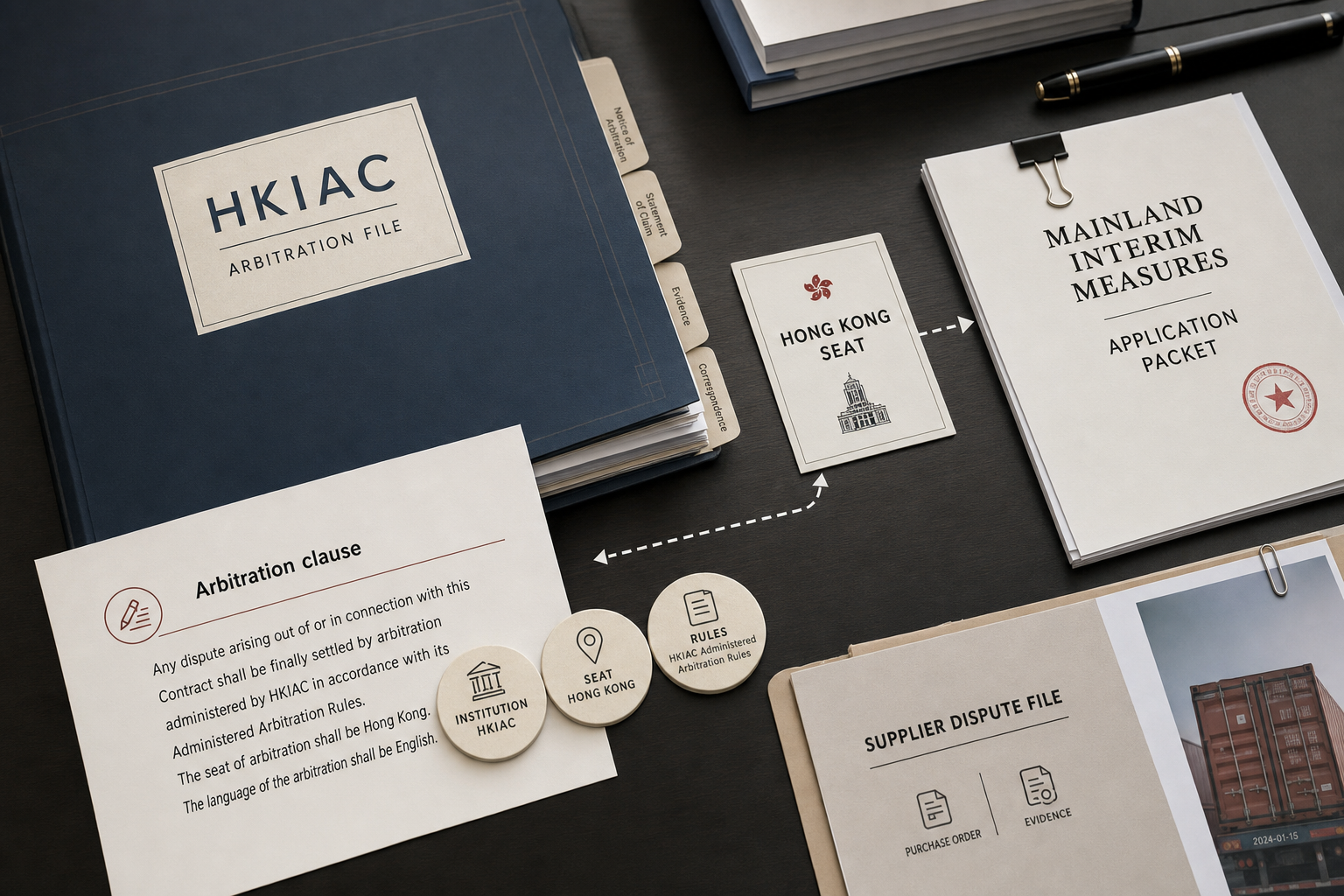
HKIAC stands for the Hong Kong International Arbitration Centre. It is a leading arbitration institution in Hong Kong and is often used in China-related commercial contracts, especially where parties want an international seat but still care about assets and evidence in Mainland China.
For foreign buyers, HKIAC is not just a brand name in an arbitration clause. Its value depends on the contract wording, the Hong Kong seat, the rules, the language, the counterparty’s assets, and whether Mainland interim measures may be needed.
If you are comparing forums by cost first, use the HKIAC fee calculator and then compare HKIAC with CIETAC, ICC and SIAC using the arbitration cost comparator.
The basic definition
HKIAC administers arbitration proceedings. It is not a court and does not itself decide the dispute. Arbitrators decide the case. HKIAC provides the institutional framework: rules, case administration, tribunal appointment support, fee systems, and procedural infrastructure.
HKIAC’s 2024 Administered Arbitration RulesHKIAC | Hong Kong International Arbitration Centre2024 Administered Arbitration Rules - HKIAC | Hong Kong International Arbitration Centrehttps://hkiac.org/wp-content/uploads/2025/11/HKIAC_2024_Rules_05.mp4 The 2024 HKIAC Administered Arbitration Rules may be viewed in PDF format through the link…hkiac.org took effect on June 1, 2024 . HKIAC’s annual statisticsHKIAC | Hong Kong International Arbitration CentreStatistics - HKIAC | Hong Kong International Arbitration Centre0 Cases 0 Jurisdictons USD 0 Amount in Dispute 2025 StatisticsHKIAC is pleased to release the following case statistics for 2025:Total new cases: A total of 58…hkiac.org report 503 total new cases in 2024, including 352 arbitrations. For China-related contracts, its public materials on the Mainland-Hong Kong interim measures arrangement are especially important.
Why HKIAC appears in China-related contracts
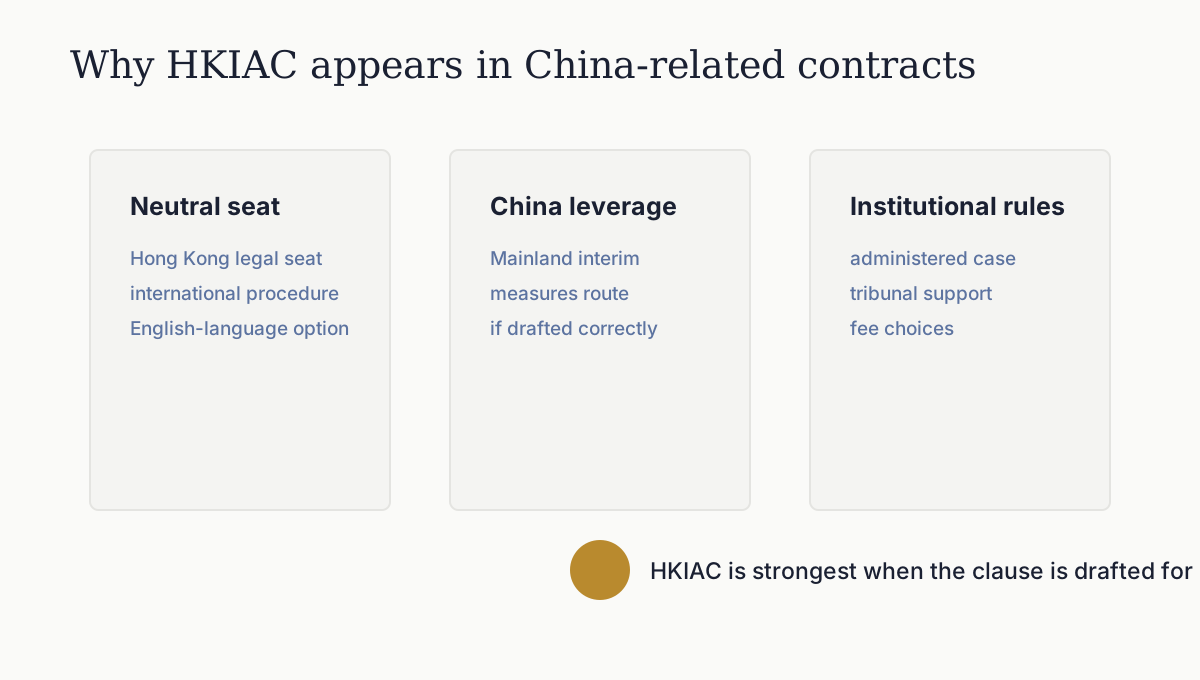
There are three practical reasons.
First, Hong Kong is a familiar neutral seat for international parties. It offers a common-law legal environment, an experienced arbitration community, and strong court support for arbitration.
Second, HKIAC can be paired with the Mainland-Hong Kong Interim Measures Arrangement if the clause and case qualify. That means a party in an eligible Hong Kong-seated institutional arbitration may apply to Mainland courts for property preservation, evidence preservation, or conduct preservation. For a supplier dispute, that can be a serious advantage.
Third, HKIAC is comfortable for English-language or bilingual disputes. This matters when the buyer, supplier, documents, witnesses, and evidence are spread across jurisdictions.
What the clause should say
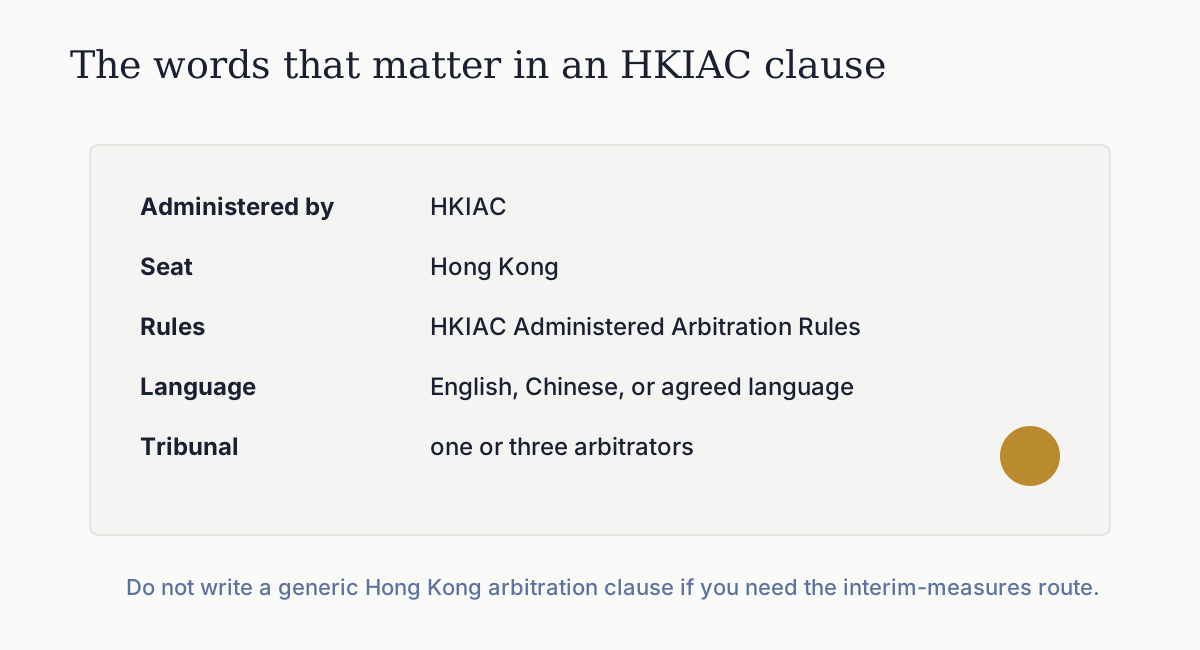
A good HKIAC clause should usually identify:
- HKIAC as the administering institution;
- Hong Kong as the seat of arbitration ;
- the applicable HKIAC rules;
- the language of arbitration;
- the number of arbitrators;
- the governing law of the contract, if appropriate.
The words “administered by HKIAC ” matter. A generic “arbitration in Hong Kong” clause may not create the same procedural route, especially if the parties later want to use Mainland interim measures.
HKIAC versus CIETAC
Clients often ask whether HKIAC is “better” than CIETAC. That is the wrong starting point.
HKIAC may be better where the parties want a neutral Hong Kong seat, an international procedural environment, English-language arbitration, and access to the Mainland interim-measures route. CIETAC may be better where the parties want a Mainland institution, closer China-side procedure, or a more direct China arbitration framework.
The choice should be made by asking:
- Where are the counterparty and assets?
- What language will the evidence and witnesses use?
- Is asset preservation likely to matter?
- What claim size justifies the cost?
- Which forum will the supplier take seriously?
- What enforcement route will be needed after the award?
There is no universal answer. There is only a better answer for a particular contract.
How HKIAC connects to demand letters
A demand letter is stronger when the recipient believes the next step is real. If a Chinese supplier receives a letter citing a clear HKIAC clause, a Hong Kong seat, and possible Mainland preservation, the letter carries more weight than a generic threat to sue somewhere far away.
But that only works if the clause actually supports the strategy. If the clause is vague, the buyer may spend the first stage of the dispute fighting over jurisdiction instead of pushing the merits.
Common mistakes
The first mistake is using HKIAC because it sounds international, without checking whether the claim size supports the cost.
The second mistake is forgetting Mainland assets. If the supplier has no meaningful assets outside China, the buyer should think about preservation and enforcement before choosing the forum.
The third mistake is mixing clauses. I have seen contracts that say disputes go to HKIAC, a Mainland court, and informal negotiation “as finally decided by either party.” That is not flexibility. It is confusion.
The fourth mistake is omitting the seat. In arbitration, the seat is not just the city of the hearing. It anchors court supervision, procedural law, and post-award challenges.
The bottom line
HKIAC is a powerful option for China-related contracts when used deliberately. Its real value is not just prestige. It is the combination of a Hong Kong seat, institutional administration, international procedure, and potential Mainland interim-measures support.
If you are drafting a supplier contract or reviewing an existing HKIAC clause after a dispute has started, contact me. I can help assess whether the clause supports a demand letter, preservation strategy, arbitration filing, or settlement route.
References
- HKIAC, 2024 Administered Arbitration Rules, including Articles 9A, 43, and 45A: https://hkiac.org/arbitration/rules-and-practice-notes/2024-administered-arbitration-rules/HKIAC | Hong Kong International Arbitration Centre2024 Administered Arbitration Rules - HKIAC | Hong Kong International Arbitration Centrehttps://hkiac.org/wp-content/uploads/2025/11/HKIAC_2024_Rules_05.mp4 The 2024 HKIAC Administered Arbitration Rules may be viewed in PDF format through the link…hkiac.org
- HKIAC, Case Statistics, including the 2024 report of 503 new cases and 352 arbitrations: https://hkiac.org/about-us/statistics/HKIAC | Hong Kong International Arbitration CentreStatistics - HKIAC | Hong Kong International Arbitration Centre0 Cases 0 Jurisdictons USD 0 Amount in Dispute 2025 StatisticsHKIAC is pleased to release the following case statistics for 2025:Total new cases: A total of 58…hkiac.org
- Supreme People’s Court and HKSAR Government, Arrangement Concerning Mutual Assistance in Court-ordered Interim Measures in Aid of Arbitral Proceedings (2019): https://cicc.court.gov.cn/html/1/219/208/210/1204.htmlcicc.court.gov.cn国际商事法庭 | CICC - Arrangement Concerning Mutual Assistance in Court-ordered Interim Measures in Aid of Arbitral Proceedings by the Courts of the Mainland and of the Hong Kong Special Administrative RegionArrangement Concerning Mutual Assistance in Court-ordered Interim Measures in Aid of Arbitral Proceedings by the Courts of the Mainland and of the Hong Kong Sp…cicc.court.gov.cn
- Department of Justice (HKSAR), Arrangement Concerning Mutual Enforcement of Arbitral Awards between the Mainland and the HKSAR (1999, supplemented 2020): https://www.doj.gov.hk/en/legal_dispute/pdf/mainlandmutual2e.pdfwww.doj.gov.hkwww.doj.gov.hk
This article is part of the China Legal Glossary series. Related reading: What Is the HK-Mainland Interim Measures Arrangement?, What Is CIETAC?, and HKIAC Fees Explained.
Frequently Asked Questions
What does HKIAC stand for?
HKIAC stands for the Hong Kong International Arbitration Centre.
Is HKIAC useful for disputes with Mainland Chinese suppliers?
It can be, especially where the contract is drafted for Hong Kong-seated HKIAC arbitration and Mainland interim measures may be important.
Is HKIAC the same as a Hong Kong court?
No. HKIAC is an arbitration institution. Hong Kong courts support arbitration, but the arbitral tribunal decides the dispute.
How much does HKIAC arbitration cost?
HKIAC costs include registration, administrative, and tribunal fees. The amount depends on the dispute value, tribunal size, fee method, procedure, and legal-fee budget.