On this page
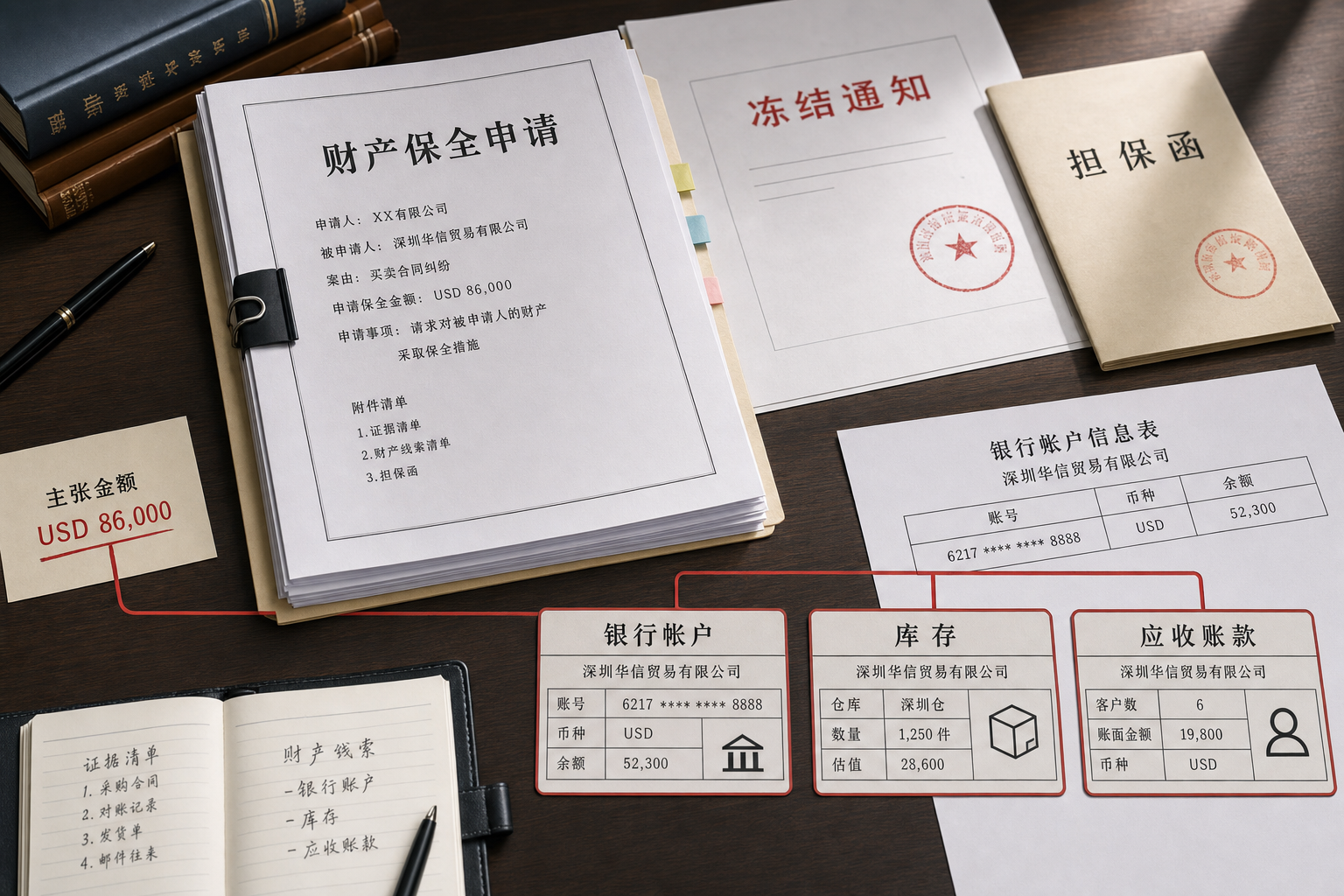
Asset preservation in China is a court-backed tool used to stop a respondent from moving money, goods, equity, real estate, or other property before a judgment or arbitral award can be enforced. In Chinese, the phrase is usually 财产保全 , often translated as property preservation or asset preservation.
For a foreign buyer, the point is simple: if a Chinese supplier has taken a deposit, failed to deliver, shipped defective goods, or is about to empty the bank account, winning later may not be enough. You need to ask whether anything can be secured now.
If the immediate question is whether the claim is worth escalating, compare the likely filing path and budget with the arbitration cost comparator and the broader China supply chain dispute strategy.
That does not mean every case should start with an asset freeze. Preservation is powerful, but it is procedural, time-sensitive, and evidence-heavy. Used well, it creates settlement pressure. Used badly, it wastes money and may warn the supplier before you are ready.
The short definition
Asset preservation is not the lawsuit. It is not the arbitration. It is not the final win.
It is an interim protective measure. A Chinese court may order property to be frozen, sealed, seized, or otherwise preserved so the respondent cannot frustrate enforcement. The Civil Procedure Law materials published by the China International Commercial Courtcicc.court.gov.cn国际商事法庭 | CICC - Civil Procedure Law of the People's Republic of China (Revised in 2017)Civil Procedure Law of the Peoplecicc.court.gov.cn describe property preservation as including seizure, detainment, freezing, or other legally prescribed measures. The broader preservation family also includes evidence preservation and conduct preservation, but when buyers talk about “freezing a supplier’s assets,” they usually mean property preservation.

The Supreme People’s Court has also promoted online preservation work through the People’s Court online preservation systembaoquan.court.gov.cn网上保全系统baoquan.court.gov.cn, which reflects how routine preservation has become in commercial disputes. The underlying logic is practical: if enforcement is the real battlefield, assets must still exist when the final decision arrives.
Why it matters in supplier disputes
Most China supplier disputes are not about abstract legal rights. They are about leverage.
A supplier that still wants future orders may negotiate after a well-written demand letter. A supplier that still holds molds or finished goods may respond to commercial pressure. But a supplier that has already received full payment and has no ongoing relationship may simply wait. If the buyer has no realistic way to reach assets in China, the supplier may decide that silence is cheaper than settlement.
Asset preservation changes that calculation.
If the supplier’s bank account, receivables, inventory, or other property is frozen, the dispute is no longer a distant legal threat. It becomes an immediate business problem for the supplier. That is why preservation often sits close to the core work of demand letters, arbitration, and litigation strategy.
The four things you need first
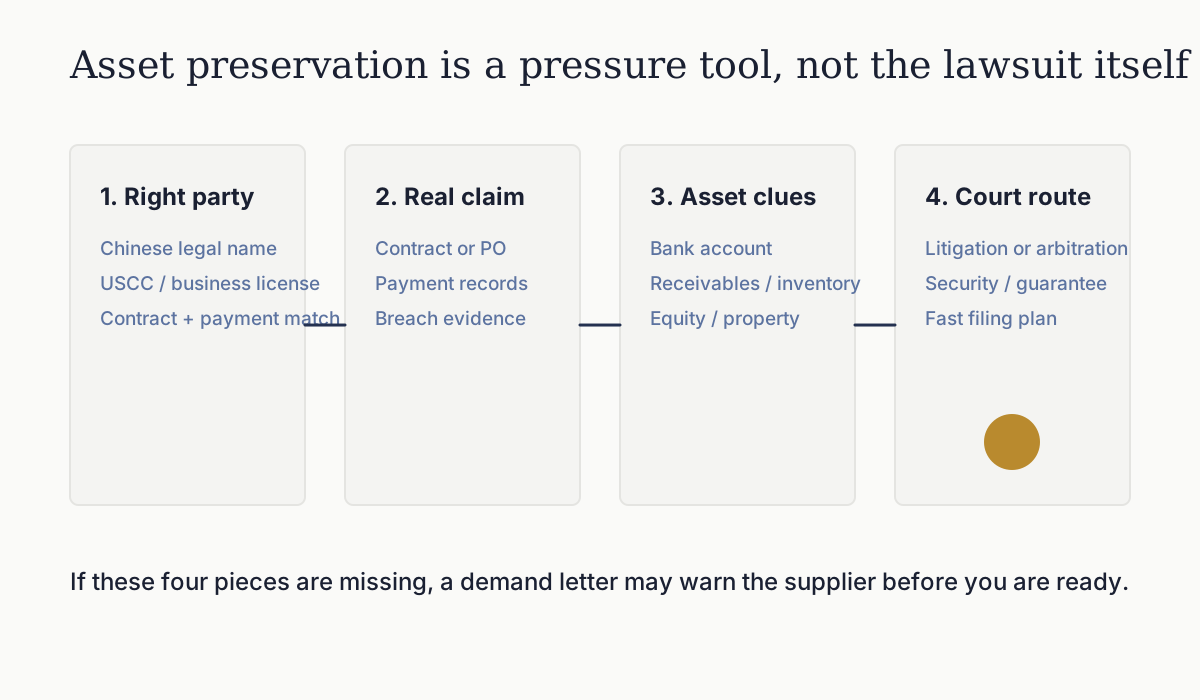
First, you need the right party. The supplier’s English trade name is not enough. You need the registered Chinese company name, the 18-character Unified Social Credit Code if available, and a match between the business license, contract, chop, invoice, and bank account. If the contract is with a Hong Kong trading company but the factory is a Mainland company, that difference matters.
Second, you need a real claim. A preservation request is not built on frustration. It is built on a contract, purchase order, payment record, inspection report, delivery promise, admission, or other evidence. The stronger the underlying claim, the cleaner the preservation application.
Third, you need asset clues . Courts do not like blind fishing. A bank account used for payment, inventory location, known warehouse, receivables from a platform customer, equity in a subsidiary, real estate record, or equipment address may all matter. The more concrete the asset information, the more realistic the application.
Fourth, you need the right procedural route. Preservation normally connects to litigation or arbitration. If your contract has a workable Chinese court clause, a Mainland arbitration clause, a CIETAC clause, or a Hong Kong-seated institutional arbitration clause that can use the Mainland-Hong Kong interim measures arrangement , the path may be different. The route has to be planned before the filing.
Security is usually required
Chinese courts commonly require the applicant to provide security. In practice, that may be cash, a bank guarantee, an insurance company guarantee, or another acceptable form depending on the court and case. This requirement exists because a wrongful preservation order can harm the respondent .
For foreign buyers, this is where budgeting becomes real. You may have a strong claim, but if the preservation target is large, the required security can affect timing and cost. It is better to know this before sending a demand letter that promises immediate legal action.
Demand letter first, or preservation first?
This is the decision that matters.
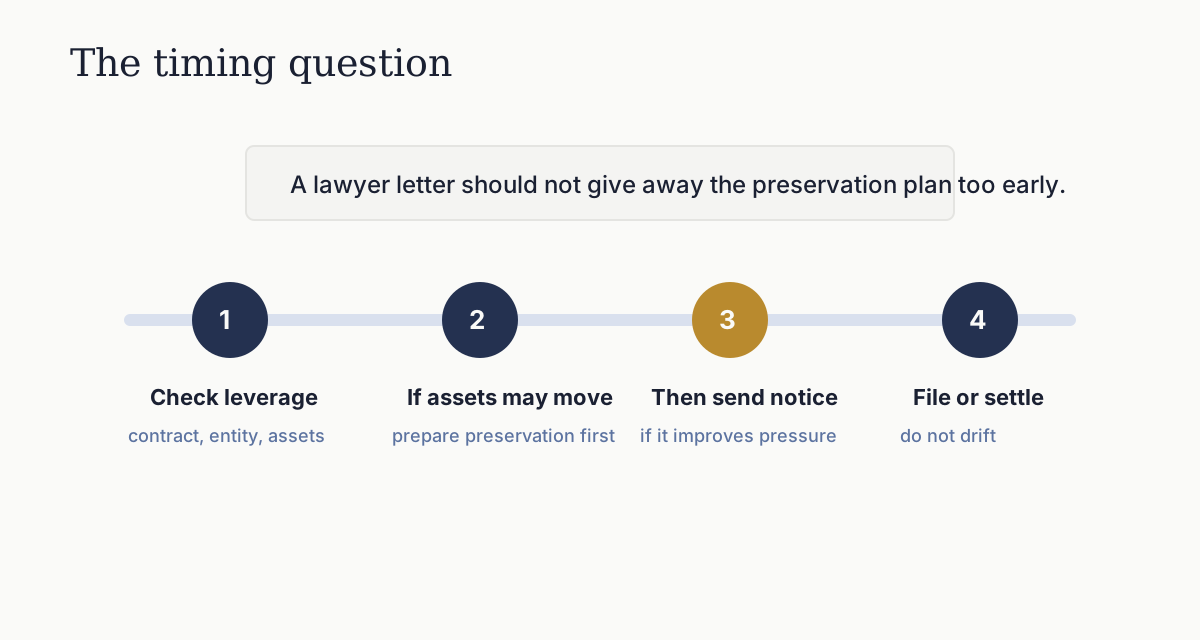
A demand letter works best when it shows the supplier that the buyer is organized, legally positioned, and ready to escalate. But if the supplier is likely to move money the moment it receives a legal threat, a demand letter may destroy the chance to preserve assets.
So the first question is not “can we send a lawyer letter?” The first question is whether the supplier still has reachable assets and whether those assets may disappear once warned.
If the claim is small, the supplier is cooperative, or the relationship still has commercial value, a demand letter may be the right first step. If the claim is large, the supplier is already evasive, the counterparty has a history of enforcement cases, or funds are likely to move, preservation should be reviewed first.
Common mistakes
The most common mistake is naming the wrong respondent. If the payment went to one entity, the contract names another, and the goods sit with a third factory, the preservation strategy must deal with that problem directly.
The second mistake is treating preservation as a punishment. Courts are not there to punish the supplier before the merits are decided. The request should match the claim amount and be supported by evidence.
The third mistake is waiting too long. By the time a foreign buyer has sent six angry emails, threatened the supplier on WeChat, and waited another month, the money may already be gone.
The fourth mistake is ignoring the forum clause. Preservation does not float in the air. It must connect to a claim route that the court can recognize.
How I use this in a case triage
When a client asks whether to send a demand letter to a Chinese supplier, I usually test preservation at the same time. The triage is short but important:
- Who is the exact Chinese legal counterparty?
- What assets are realistically reachable?
- What documents prove the claim?
- What forum clause do we have?
- Will the supplier move assets if warned?
- Is the claim amount large enough to justify preservation cost?
If the answers are weak, the work starts with evidence and entity cleanup. If the answers are strong, the demand letter is written with the preservation and filing path already in mind.
The bottom line
Asset preservation in China is one of the few tools that can turn a supplier dispute from “please refund us” into “this claim may affect your assets now.” That is why it matters.
But it is not a magic button. It depends on the right party, the right claim, asset clues, procedural route, and timing. Before sending a demand letter, especially in a high-value supplier dispute, ask the harder question first: should preservation be prepared before the supplier is warned?
If you are dealing with a Chinese supplier and need to decide between a demand letter, negotiation, preservation, arbitration, or litigation, contact me. I can review the contract, payment records, evidence, and forum clause before you choose the first formal move.
References
- National People’s Congress, PRC Civil Procedure Law (2023 amendment), including Articles 103, 104, and 108: http://www.npc.gov.cn/npc/c2/c30834/202401/P020240108541839745616.pdfwww.npc.gov.cnwww.npc.gov.cn
- Supreme People’s Court, Provisions on Several Issues Concerning the Handling of Property Preservation Cases by People’s Courts, including Articles 10-11: https://www.court.gov.cn/fabu/xiangqing/30101.htmlwww.court.gov.cn权威发布 - 中华人民共和国最高人民法院最高人民法院政务网站,最高人民法院网,最高人民法院,最高人民法院网是人民群众了解和联系最高人民法院的重要窗口,承载着司法公开、法治宣传、服务群众、接受监督等重要使命。是最高人民法院的政务网站,是最高人民法院在互联网上唯一的正式身份。www.court.gov.cn
- Supreme People’s Court Gazette, Arrangement Concerning Mutual Assistance in Court-ordered Interim Measures in Aid of Arbitral Proceedings by the Courts of the Mainland and of the HKSAR: http://gongbao.court.gov.cn/Details/512d83a54880609e30b96321df3899.htmlgongbao.court.gov.cn最高人民法院关于内地与香港特别行政区法院就仲裁程序相互协助保全的安排 - 中华人民共和国最高人民法院公报gongbao.court.gov.cn
- China International Commercial Court, Civil Procedure Law of the PRC (English materials): https://cicc.court.gov.cn/html/1/219/199/200/644.htmlcicc.court.gov.cn国际商事法庭 | CICC - Civil Procedure Law of the People's Republic of China (Revised in 2017)Civil Procedure Law of the Peoplecicc.court.gov.cn
- Supreme People’s Court, People’s Court Online Preservation System: https://baoquan.court.gov.cn/baoquan.court.gov.cn网上保全系统baoquan.court.gov.cn

This article is part of the China Legal Glossary series. Related reading: When a China Demand Letter Works, and When It Backfires, How to Sue a Chinese Supplier, and What Is the HK-Mainland Interim Measures Arrangement?.
Frequently Asked Questions
What does asset preservation mean in China?
Asset preservation usually means a court order that freezes, seals, seizes, or otherwise secures assets so the respondent cannot easily move them before the dispute is decided and enforced.
Can foreign buyers apply for asset preservation against a Chinese supplier?
Yes, in the right procedural route. The buyer normally needs a real claim, the correct Chinese legal counterparty, asset clues, Chinese filings and translations, and security or a guarantee.
Should I send a demand letter before applying for preservation?
Not always. If there is a serious risk that the supplier will move funds or goods after being warned, preservation should be evaluated before the first formal threat is sent.
Can I freeze a Chinese supplier's bank account before arbitration?
Sometimes. The route depends on the arbitration clause, the court with jurisdiction, asset clues, evidence, translations, and the security or guarantee required by the court.