On this page
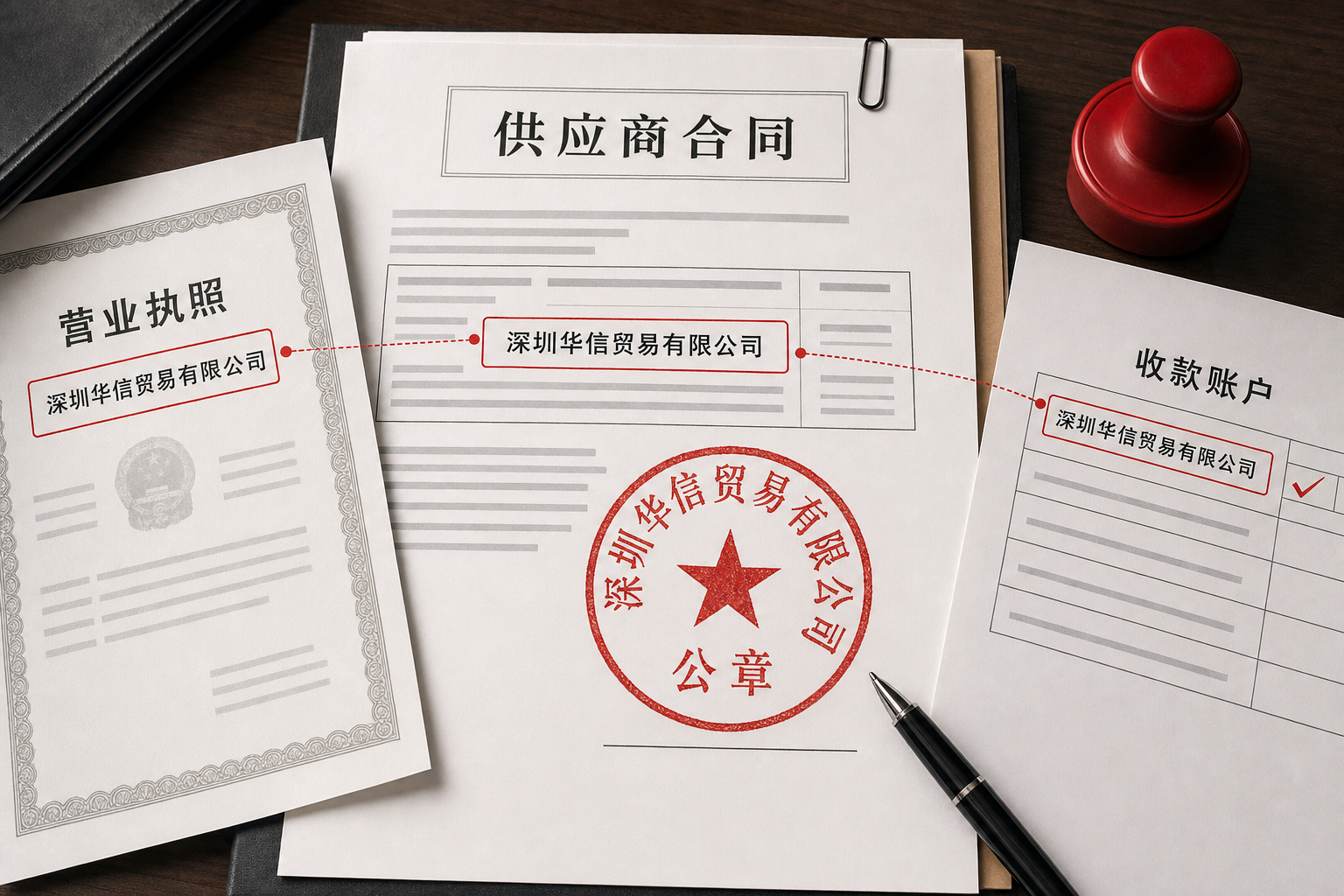
A China company chop is the company’s official seal. In Chinese, it is called 公章 . In many Chinese commercial settings, the chop can matter more than a handwritten signature, because it is treated as strong evidence that the company approved the document.
For foreign buyers, the lesson is practical: do not sign a supplier contract, pay a deposit, or accept a settlement schedule without checking which Chinese legal entity is stamping the document.
The short definition
A company chop is a physical seal used by a Chinese company on contracts, authorizations, corporate documents, and other formal records. It normally shows the company’s registered Chinese name. The most important chop is the official company chop, but companies may also use contract chops, finance chops, invoice chops, and other specialized seals.
The EU SME CentreEU SME Centre: China Market Research, Training, Advice | Get Ready for ChinaHow can I know if the chops used by Chinese companies are valid? | EU SME Centre: China Market Research, Training, Advice | Get Ready for ChinaIn China, company stamps (chops) are essential for any business contract – much more than in the EU. They are a symbol of the legal rights of the company. Ther…www.eusmecentre.org.cn and China-focused legal commentators have long warned foreign companies that chops are central to Chinese business practice. The reason is not cultural decoration. It is evidence of authority.

Common types of chops
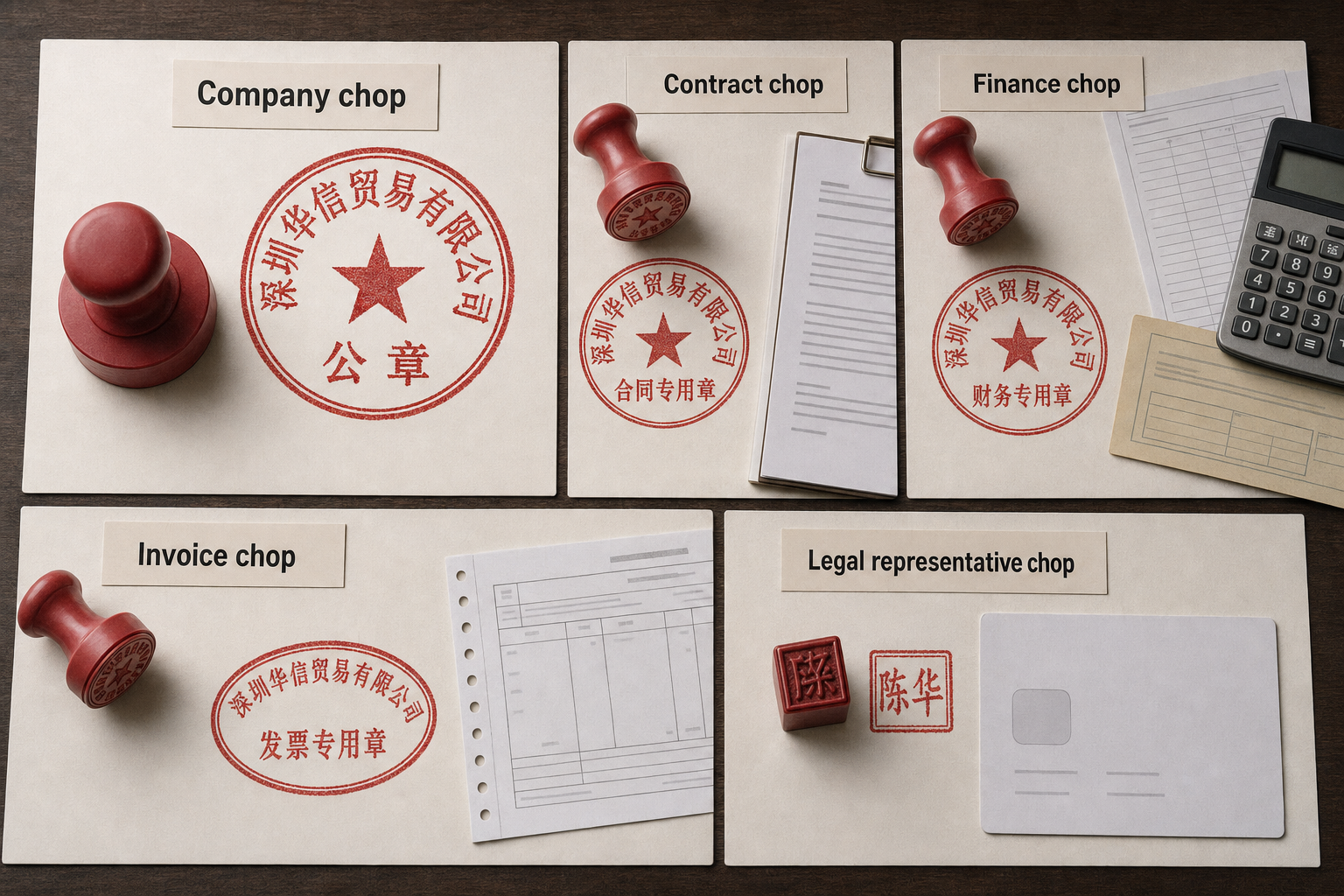
The official company chop is the core seal. A genuine official chop on a contract usually makes it much harder for the company to deny that the contract was authorized.
A contract chop may also be used for contract execution. Depending on the company and context, it can be valid for signing contracts, but the buyer should still check that it belongs to the same legal entity.
A finance chop is commonly connected to banking and finance matters. An invoice chop is used for tax invoices. A legal representative chop may also appear in corporate documents.
The exact internal chop control system can vary by company. For a foreign buyer, the external risk is simple: the name on the chop must match the counterparty you intend to bind.
Why the chop matters more than the English name
Foreign buyers often know the supplier by an English trading name. That name may appear on Alibaba, a website, a booth, an email signature, or a pro forma invoice. It may not be the registered legal name.
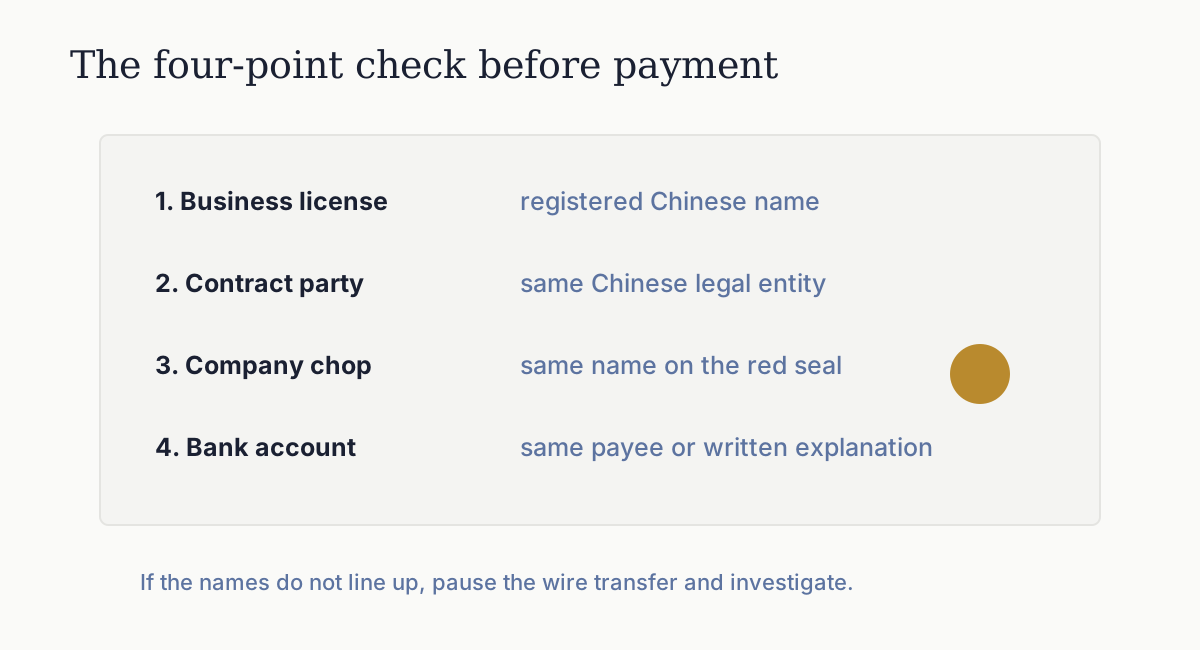
The registered Chinese name is the anchor. The company chop should match that registered Chinese name. The contract party should use that same name. The business license should show the same name. The bank account holder should usually match too.
If those names do not line up, stop and investigate.
Is a signature enough?
Sometimes a signature can bind a company, especially where the signer has authority or apparent authority . But relying only on a salesperson’s signature creates more proof problems. If the supplier later says the salesperson had no authority, the buyer may have to prove authorization through emails, behavior, role, prior dealings, business card, company account, or other evidence.
A genuine company chop reduces that fight. It does not eliminate every issue, but it gives the buyer a stronger starting point.
Common problems
One problem is a fake chop . A red round stamp on a PDF is not automatically genuine. The buyer should check the Chinese name and, for higher-value contracts, ask for original stamped copies or a signing process that can later be proven.
Another problem is the wrong entity. A trading company may stamp the contract while a factory performs production. A Hong Kong company may invoice while a Mainland factory receives instructions. A personal account may receive money. These structures are not always fraudulent, but they must be documented.
A third problem is scanned execution. A stamped PDF may be enough for day-to-day transactions, but for larger deals, originals, verified email transmission, video signing, courier records, or other proof may matter later.
How the chop affects disputes
In a supplier dispute, the chop can affect everything:
- whether the contract binds the supplier;
- whether the arbitration clause is valid against the supplier;
- whether a settlement agreement is enforceable;
- whether a refund schedule can be used later;
- whether a demand letter can name the right entity;
- whether asset preservation targets the correct respondent.
If the chop is missing or mismatched, the case is not hopeless. But the first phase of legal work may shift from “supplier breached the contract” to “which company is actually bound.”
The bottom line
A China company chop is not a formality. It is one of the fastest ways to test whether the supplier contract points to the right Chinese legal entity.
Before you pay a deposit, check the business license, contract party, company chop, and bank account together. If the names do not match, ask why before the money leaves.
If you need help reviewing a Chinese supplier contract, company chop, business license, or payment structure, contact me. A short pre-payment check can prevent a much harder dispute later.
References
- Supreme People’s Court, PRC Civil Code, including Articles 172 and 490: https://www.court.gov.cn/zixun/xiangqing/233181.htmlSupreme People's Court of ChinaCivil Code of the People's Republic of ChinaChinese-language text of the PRC Civil Code, published on the Supreme People's Court website.www.court.gov.cn
- Supreme People’s Court, Minutes of the National Courts’ Civil and Commercial Trial Work Conference (2019), item 41 on the legal effect of sealing acts: https://www.court.gov.cn/zixun/xiangqing/199691.htmlwww.court.gov.cn全国法院民商事审判工作会议纪要 - 中华人民共和国最高人民法院最高人民法院政务网站,最高人民法院网,最高人民法院,最高人民法院网是人民群众了解和联系最高人民法院的重要窗口,承载着司法公开、法治宣传、服务群众、接受监督等重要使命。是最高人民法院的政务网站,是最高人民法院在互联网上唯一的正式身份。www.court.gov.cn
- State Council, Provisions on the Administration of Seals of State Administrative Organs, Enterprises, Institutions and Social Organizations (Guo Fa [1999] No. 25): https://www.gov.cn/zhengce/content/2010-11/15/content_1273.htmwww.gov.cn国务院关于国家行政机关和企业事业单位社会团体印章管理的规定_文秘工作_中国政府网www.gov.cn
- State Administration for Market Regulation, National Enterprise Credit Information Publicity System: https://www.gsxt.gov.cn/index.htmlwww.gsxt.gov.cnwww.gsxt.gov.cn



This article is part of the China Legal Glossary series. Related reading: What Is a China Social Credit Code?, What Is an NNN Agreement in China?, and Before You Pay a Chinese Supplier, Check These 10 Things.
Frequently Asked Questions
What is a China company chop?
A company chop is a physical company seal. In China, the official company chop is often central evidence that a company approved a contract or document.
Is a signature enough for a Chinese supplier contract?
Sometimes, but a genuine company chop or properly authorized contract chop is usually stronger than a salesperson's signature alone.
What should I check on a company chop?
Check that the Chinese name on the chop matches the business license and the contract party, and that the signing party is the same entity you will pay.